Aml Flash Zip Files
понедельник 21 января admin 23
Hostname m201d m201C Date of purchase 20-10 Android 4.4.2 4.4.2 Firmware build number MXQ.V2.0.53 KOT49H.20151225 test-keys Factory rooted Yes No Linux kernel 3.10.33 3.10.33 CPU ARMv7 revision 1 ARMv7 revision 1 Machine Amlogic Meson8B Amlogic Meson8B Total RAM memory 510 Mib (345 Mb total free with LibreELEC). The original Linux kernel gives fake values: 824 Mb with /proc/meminfo or 1926 Mb with free 1022 MiB NAND Storage 8GiB 8 GiB WiFi driver RTL871X: rtl8189es RTL871X: rtl8189es Remote factory_code 0x40400001 0xfe010001 Recovery mode Yes, toothpick method Only from external SD card LibreELEC-S805.m201d.arm-7.0.3.3d.img LibreELEC-S805.arm-8.2-8.1.5-HD18Q.img Note Time from the internet sometimes does not work. Overscan problem: image borders drop out of the screen. The device does not have a clock inside, it relies on the time it gets from the internet. With the latest firmware (2016-01-26) there is a very annoying bug: from the Android settings we enabled time from the internet and set the proper timezone, this settings works just once, after a reboot the time is almost always unset.
Video Resolution. No need to on model m201d, because it is already.
You can install a and issue the su command. If you don't want to register into Google to access the Play Store from the MXQ, you can get the.apk file somewhere, put it into the SD card, browse the folders and install it. Another useful app to install is an, used to open a shell session from a PC into the device or to transfer files via scp. There is also an, etc.
If the device does not have its su binary installed, you have to boot in TWRP recovery mode and install superuser from a zip file. You need an update.zip archive, not the.apk Android package, this is why the app is distributed also as a zip file (see below for ). Save it into an SD card along with the TWRP recovery, boot from it and install. The su binary installed by SuperSU is not standalone: when invoked (e.g. From the command line) it will bring-up the graphical interface of SuperSU, which asks to allow superuser privileges to the requesting app.
Customer programming software cps software for mac. May be there are superuser binaries which does not require this (e.g. The one shipped with model m201d). Recovery Mode and Backup. Like others Android devices, this one too can boot into Recovery Mode. This is a minimal operating system where it is possible to delete all or some user data and files, perform system updates, etc. Unlike many Android devices, the MXQ can boot from any recovery image, it does not need a signed one and it is not required to select a non-stock recovery.
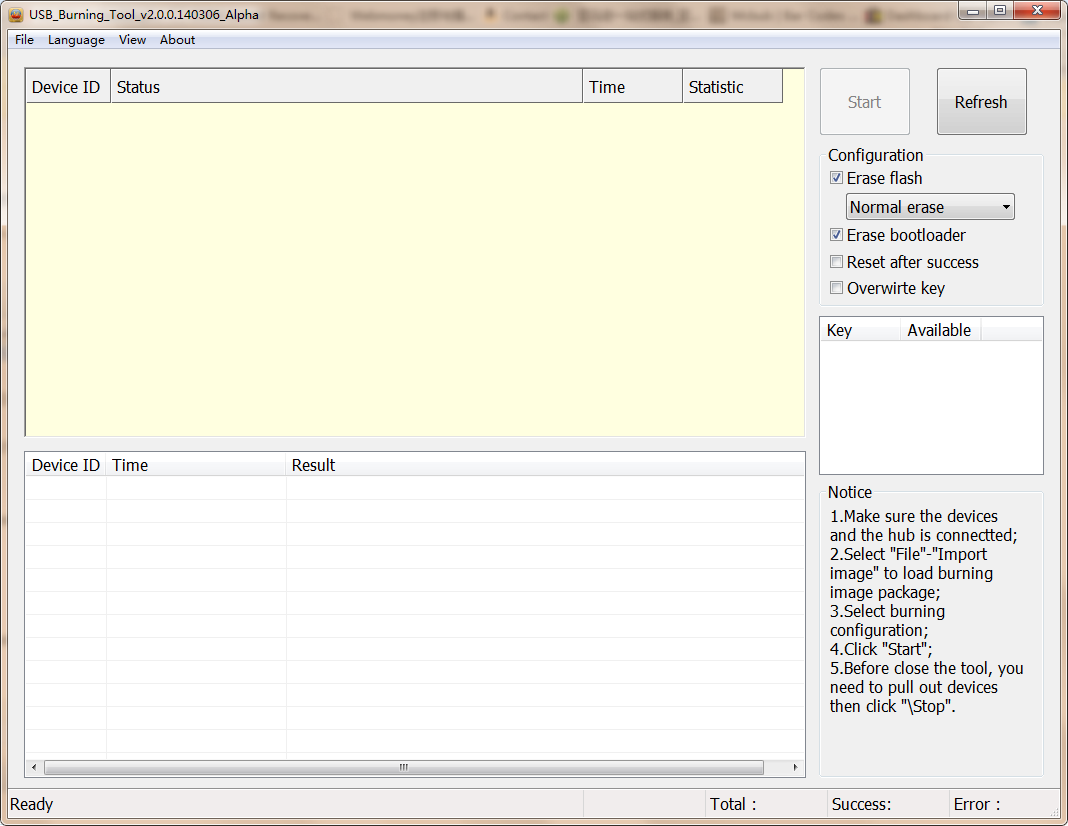
AML FLASH TOOL aka ImageBurnTool. I upload corrected version of AML Flash tool. It's Ok, untill you'll flash 40D_resque.zip. I’m using a Mac to do this procedure; however, you can do it on any computer that can compress and uncompress ZIP files. Here’s how: 1. Download the and save it to your computer. Double-click on the ZIP to extract it.
More Project IGI 2: Covert Strike Fixes [Deviance] backup CD Project IGI 2 v1.2 ENG Project IGI 2 v1.1 ENG Project IGI 2 v1.1 NORDIC. MegaGames - founded in 1998, is a comprehensive hardcore gaming resource covering PC, Xbox One, PS4, Wii U, Mobile Games, News, Trainers, Mods, Videos, Fixes, Patches.  IGI-2: Covert Strike is a computer game developed by Innerloop Studios and released by Codemasters in 2003. The game is a stealth-based first person shooter. It is the sequel to Innerloop's Project IGI: I'm Going In.
To enter the recovery mode follow the toothpick method. It should be possible to sart the built-in (stock) recovery, or pick one from the SD card. My device with firmware 2016-01-26 is unable to start from the built-in, it just keep on rebooting, so it definitely needed one on the SD card. In Android world, the backup of NAND flash memory partitions is called a NANDroid backup; it contains everything, from operating system to user data. Beware that backup images created with one tool (e.g. TWRP) are generally not compatible with another tool (e.g. Once booted into TWRP, you can click the Backup button and save the images of installed firmware.
The archives will be stored into the internal storage of the MXQ, under the directory /storage/sdcard0/TWRP/mxq/ (really a link into /mnt/shell/emulated mounting point). In my case it required 1.5 Gb, where the free space was about 3.9 Gb. The saved images are (see for info about their content): •. One.zip archive, e.g. M201-ota-20150915.zip, which is actually a JAR archive. The file factory_update_param.aml just tells what is the archive to use for the upgrade and if erasing user data is required, this is an example: --update_package=/sdcard/m201-ota-20150915.zip --wipe_data --wipe_cache --wipe_media The update zip file is actualy a JAR archive, it can be extracted using jar xvf file.zip.